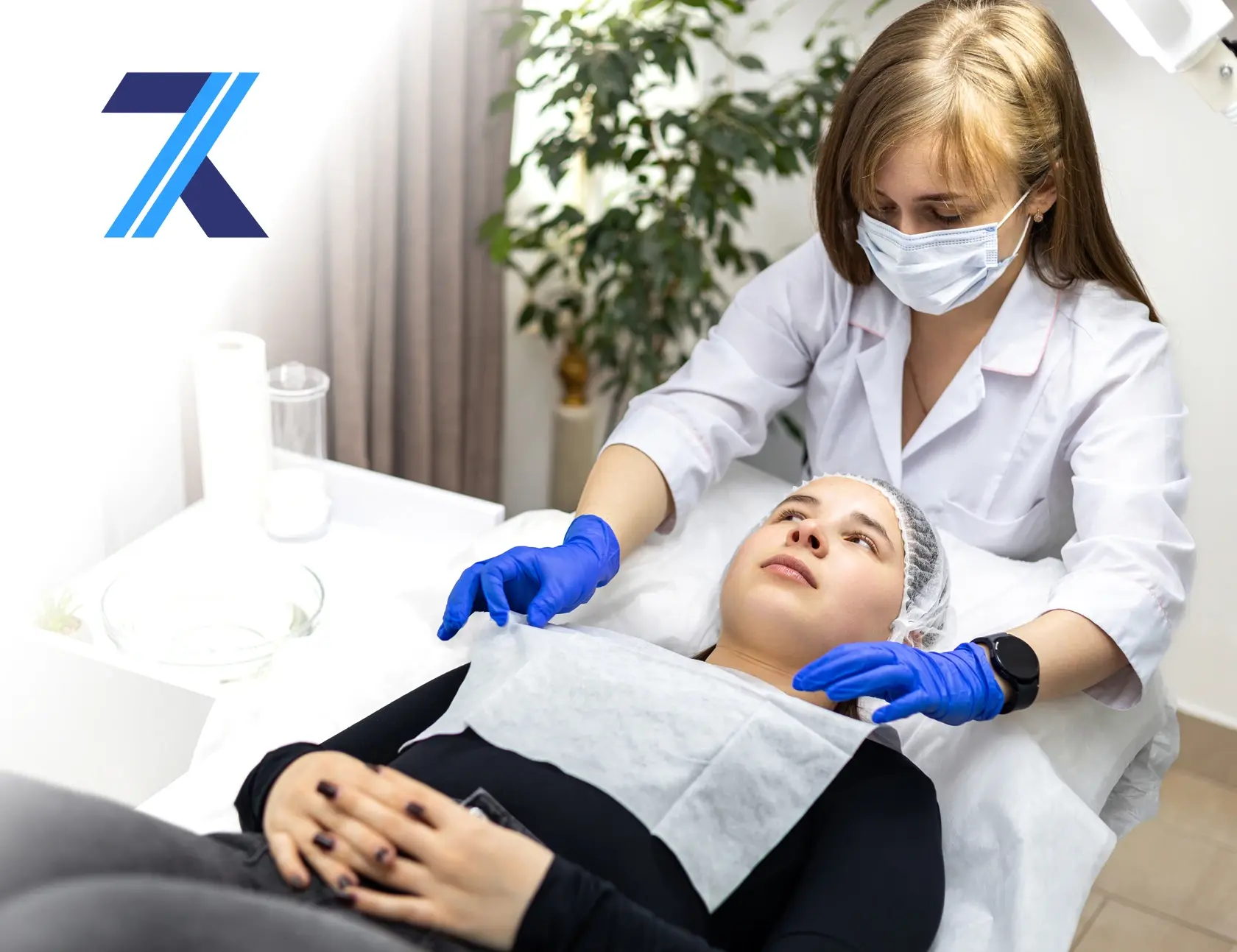
Someone typing "Botox near me" or "best aesthetic clinic near me" into Google is not browsing casually. They are actively weighing a treatment or a provider, often with their card ready.
That makes Google Search one of the most valuable channels for aesthetic clinic lead generation. But ranking at the top of the page is not the win. The win is turning that search into a booked, paying patient.
The best Google Ads for Aesthetic Clinics campaign is not the one with the most clicks. It is the one that turns high intent searches into profitable consultations. This guide walks through the full path: intent, keywords, campaign structure, ads, landing pages, tracking, optimization, and revenue.
Building that path takes time most clinic owners do not have between patients. 7 Kings Marketing builds and manages this exact system for aesthetic clinics, so book a free strategy call if you would rather have it handled for you.
Why Google Ads Works for Aesthetic Clinics
Most marketing pushes a message at people who were not looking for it. Google Ads works the opposite way. It captures demand that already exists the moment someone searches.
A person typing "Botox clinic near me" already wants the treatment. Your job is simply to be the answer they click.
Google Ads for Aesthetic Clinics also performs differently than most other categories. According to WordStream's 2025 benchmark report, the Physicians & Surgeons category posted an average conversion rate of 11.62 percent, one of the strongest results across all industries tracked. LocaliQ's healthcare search benchmarks put the broader healthcare average at 8.09 percent, well above most non healthcare sectors.
SEO builds long term visibility. Google Ads produces visibility today. Search Engine Results Pages, the Google Display Network, and Performance Max all play a role, but Search remains the strongest channel for capturing patients who are ready to act now.
Start With Treatment Intent, Not Generic Clinic Keywords
A generic "book a consultation" campaign wastes the budget. Someone searching for Botox and someone searching for laser hair removal are different patients with different concerns and different treatment values.
Prioritize treatments by demand, profitability, average treatment value, repeat potential, and competition. A treatment with strong search volume and low profitability is not always worth chasing first.
A clean structure separates campaigns by category, for example:
- Campaign 1, Injectables: Botox, lip filler, dermal fillers, anti wrinkle injections.
- Campaign 2, Skin Treatments: microneedling, HydraFacial, chemical peels, skin resurfacing.
- Campaign 3, Body Treatments: body contouring, CoolSculpting, fat reduction.
- Campaign 4, Laser Treatments: laser hair removal, laser skin resurfacing.
This structure alone makes budget control, reporting, and optimization far easier than one broad "aesthetic services" campaign.
Build a High Intent Keyword Strategy for Aesthetic Clinics
Strong keyword coverage falls into a few clear groups.
Treatment plus location: Botox in your city, lip filler in your city, dermal fillers in your city. Near me searches: Botox near me, filler clinic near me, med spa near me. Commercial investigation: best Botox clinic in your city, best aesthetic clinic in your city, Botox clinic reviews. Price and cost searches: Botox cost, lip filler price, CoolSculpting cost.
Price searches often get dismissed as low quality, but paired with the right offer and landing page they convert well. A patient comparing prices is already deciding, not just browsing. Branded and competitor terms can also work, though clinics should stay careful about trademark and advertising policy rules.
Use Negative Keywords to Stop Wasted Ad Spend
Negative keywords protect budget from searches that will never convert into a patient.
Common examples worth excluding: free, DIY, at home, course, training, certification, jobs, career, salary, wholesale, supplier, and tutorial. Someone searching "Botox training course" is not a patient.
Review the search term report weekly. New irrelevant queries appear constantly, and negative keyword lists need ongoing maintenance, not a one time setup.
Structure Google Ads Campaigns for Maximum Relevance
Effective Google Ads campaign optimization starts with a clear relevance chain: campaign, ad group, keyword, ad, landing page.
For example: the Injectables campaign contains a Botox ad group, targeted by keywords like Botox near me and Botox in your city, served by a Botox focused ad, pointing to a dedicated Botox landing page with a "Book a Botox Consultation" call to action.
This granular structure improves budget control, reporting accuracy, Quality Score, and ad relevance. Avoid the common mistake of lumping Botox, fillers, laser hair removal, and body contouring into one generic campaign. It blends signals Google needs to optimize properly and it blends your reporting too.
Write Google Ads That Turn Searches Into Clicks
Search ads have no image to carry the message. Headlines and descriptions have to do all the selling.
When someone searches "Botox clinic in your city," the ad should immediately signal the treatment, the location, credibility, and a clear next step.
Focus on outcomes rather than the treatment name alone. Instead of simply saying Botox treatment, communicate personalized consultations, experienced practitioners, and natural looking results. Avoid promises that sound guaranteed.
A simple example: headline one names the treatment and city, headline two mentions personalized consultation, headline three prompts booking. The description invites the reader to explore treatment with experienced practitioners and book today.
Google Ads for Injectables: Build Campaigns Around High Intent Treatments
Injectables deserve their own dedicated approach within Google Ads for Aesthetic Clinics because patient concerns, search intent, and treatment value all differ by procedure.
Botox campaigns should target Botox near me, Botox in your city, and Botox consultation. Lip filler campaigns should target lip filler near me, lip augmentation clinic, and lip filler consultation. Dermal filler campaigns should target dermal fillers in your city and facial fillers near me.
Botox alone drove over 9.4 million neurotoxin treatments across the United States in 2024, according to the American Society for Aesthetic Plastic Surgery. That volume means competition is intense, so campaigns targeting Google Ads for injectables need their own keywords, ads, and landing pages rather than sharing space with body or laser treatments.
Build Landing Pages That Convert Paid Traffic
Sending paid clicks to a homepage is one of the most common and costly mistakes in this category. Every ad needs a landing page that matches the exact promise in the headline.
A Botox ad should land on a Botox page. A lip filler ad should land on a lip filler page. A laser hair removal ad should land on a laser hair removal page.
Above the fold, include a treatment specific headline, a clear value proposition, one primary call to action, and trust signals like reviews and practitioner credentials. Below that, add a booking form, click to call option, FAQs, and social proof.
Mobile matters most. Most aesthetic searches happen on a phone, so pages need fast load times, thumb friendly buttons, short forms, and simple navigation.
Make Aesthetic Clinic Lead Generation the Real Goal
Clicks are not leads, and leads are not patients. The full funnel runs from impression to click, to landing page, to lead, to booked consultation, to showed consultation, to treatment, and ideally to repeat treatment.
Real aesthetic clinic lead generation means optimizing every stage of that funnel, not stopping the moment a form gets submitted. A clinic that only tracks form fills is flying half blind.
Track the Metrics That Actually Matter
Split your reporting into three tiers.
- Top of funnel: impressions, click through rate, cost per click, and impression share.
- Lead metrics: conversion rate, cost per lead, phone calls, and form submissions.
- Business metrics: cost per booked consultation, show rate, consultation to treatment conversion, customer acquisition cost, and return on ad spend.
A 100 dollar lead can outperform a 30 dollar lead if it consistently becomes a high value, repeat patient. Cost per lead alone tells you almost nothing about profitability. Prospyr's 2026 industry data found aesthetic clinics running paid ads saw an average return of 3.62 dollars for every dollar spent, with top performers reaching 7 times that figure.
Set Up Conversion Tracking Before Scaling
Track online conversions like form submissions, booking confirmations, and click to call actions. Then track offline outcomes like qualified leads, attended consultations, and actual treatment revenue.
Connecting Google Ads, Google Analytics, your CRM, booking software, and call tracking lets Google optimize toward real patient outcomes instead of surface level form fills. Offline conversion imports are what turn a campaign from guesswork into a system that learns.
Google Ads Campaign Optimization: What to Optimize Every Week
Consistent, weekly attention is what separates a campaign that plateaus from one that keeps improving.
Review search terms and add fresh negative keywords. Pause weak keywords and expand terms that are converting. Test new headlines, offers, and calls to action. Check landing pages for speed, clarity, and mobile usability. Shift budget toward the treatments and locations producing the most profitable patients, not just the most leads.
This weekly rhythm is the core of real Google Ads campaign optimization, and it is where most self managed campaigns fall behind.
Use Geographic Targeting to Reach Patients Who Can Actually Visit
A clinic in one city gains nothing from clicks in another state. Radius targeting, city level targeting, and location exclusions keep budget focused on people who can realistically walk through the door.
How Much Should an Aesthetic Clinic Spend on Google Ads?
There is no single universal number, but a simple formula helps plan a realistic budget.
Monthly budget divided by estimated cost per click gives potential click volume. Clicks multiplied by landing page conversion rate gives leads. Leads multiplied by booking rate gives booked consultations. Booked consultations multiplied by treatment conversion rate gives new patients. New patients multiplied by average patient value gives revenue.
Actual cost per click depends heavily on treatment and market, but recent 2026 agency data gives a useful reference point:
- Botox and other injectable searches typically run 8 to 28 dollars per click, with premium metros like New York and Los Angeles trending toward the higher end.
- Lip filler searches average 10 to 22 dollars per click.
- CoolSculpting and body contouring searches average 9 to 20 dollars per click.
- Laser hair removal searches are among the more affordable categories, typically 3 to 12 dollars per click.
- Broad med spa and aesthetic clinic terms average 5 to 15 dollars per click, though competitive near me phrases can climb past 25 dollars.
These figures move with market competition and season, so use them as a planning reference rather than a fixed quote for your account.
Reported cost per lead ranges vary by source and market. One 2026 industry breakdown puts Botox and filler campaigns around 50 to 80 dollars per lead once optimized, with body contouring closer to 80 to 130 dollars. Treat any number like this as a planning benchmark, not a guarantee, since market, treatment mix, and competition all shift the outcome.
Common Google Ads Mistakes Aesthetic Clinics Should Avoid
- Sending traffic to the homepage instead of a treatment page.
- Ignoring negative keywords.
- Combining every treatment into one broad campaign.
- Skipping location targeting. No call tracking. No booking tracking.
- Optimizing for clicks instead of patients. Ignoring mobile landing pages.
- Pausing campaigns too early.
- Using unrealistic outcome claims.
- Never reviewing search terms.
- Scaling budget before conversion tracking is accurate.
Most underperforming campaigns fail from a handful of these mistakes stacked together, not one dramatic error.
If more than a couple of these sound familiar, an audit usually finds the fix fast. 7 Kings Marketing offers a free Google Ads audit for aesthetic clinics, pinpointing exactly where budget is leaking before you spend another dollar.
Google Ads Compliance for Aesthetic Clinics
Aesthetics sits in a sensitive advertising category, so compliance deserves real attention. Keep treatment descriptions clear and avoid claims that guarantee results. Make it clear a cosmetic procedure is not a medical necessity, and never promise a specific outcome.
One point clinics often miss: Botox and several other injectables fall under Google's restricted treatment policies in many countries, which can mean submitting documentation and going through a certification process before those ads are approved to run. Skipping this step is one of the most common reasons injectable campaigns get stuck before they even launch.
Before and after imagery is generally permitted on Google Search ads, which puts Google ahead of platforms like Meta on this specific rule. Even so, policy details shift often, so always confirm current guidelines directly with Google rather than relying on last year's rules. Privacy around patient information also matters, especially in booking forms and call tracking setups.
Google Ads + SEO + Meta Ads: Build a Complete Consumer Acquisition Funnel
Google Ads should not operate alone. Google Ads captures high intent demand. SEO builds long term organic visibility. Meta Ads create awareness and support retargeting. A complete Google Business Profile supports local trust and discovery.
Together they form one path: search, website, remarketing, consultation, patient. Clinics that lean on only one channel usually plateau faster than clinics running a connected system.
A 30 Day Google Ads Optimization Framework for Aesthetic Clinics
- Week one is foundation: audit tracking, research keywords, build campaign structure, create landing pages, and set an initial negative keyword list.
- Week two is data collection: monitor search terms, confirm conversion tracking is firing correctly, and watch click through rate and cost per click trends.
- Week three is optimization: pause weak keywords, add negatives, test new ad copy, and adjust landing pages based on early results.
- Week four is scaling: identify the winning treatments, increase investment carefully, import offline conversions, and set a baseline for cost per lead and return on ad spend.
Final Takeaway: Optimize for Patients, Not Clicks
The winning aesthetic clinic Google Ads campaign is not necessarily the one with the lowest cost per click. It is the campaign that targets the right search, shows the right ad, lands on the right page, and turns the right lead into a profitable patient.
Getting every one of those steps right, and keeping them right week after week, is exactly the kind of work our team at 7 Kings Marketing handles for aesthetic clinic and med spa owners every day. If your current campaigns are generating clicks without generating patients, that gap is usually fixable with the right structure and tracking in place.
FAQs
Can you actually run Google Ads for Botox and other injectables?
Yes, but not automatically. Botox and several injectables fall under Google's restricted treatment category in many countries, so clinics typically need to submit documentation and get certified before those specific ads are allowed to run.
Are before and after photos allowed in Google Ads for aesthetic clinics?
Generally yes on Google Search, which is more permissive than platforms like Meta on this point. Even so, imagery still needs to avoid suggesting a guaranteed or exaggerated result.
Should aesthetic clinics send Google Ads traffic to their homepage?
No. A dedicated landing page matched to the exact treatment in the ad converts noticeably better than a homepage or a general services page.
What is a good cost per lead for an aesthetic clinic?
Reported figures vary a lot by source and market, generally landing somewhere between 45 and 130 dollars for non surgical treatments, with surgical procedures running higher. Treat any single number as a planning benchmark rather than a guarantee.
How much should an aesthetic clinic spend on Google Ads each month?
Enough to gather meaningful data on one or two treatment categories first, rather than spreading a small budget thin across every service at once. From there, spend scales with what the data shows is profitable.
What keywords should aesthetic clinics avoid targeting?
Broad single word terms without a modifier, purely educational searches like what Botox is made of, and DIY or at home queries. These attract clicks that rarely turn into patients.
How long does it take for Google Ads to start generating leads for a med spa?
Clicks and leads can begin within days of launch, but most clinics need four to six weeks of consistent data before drawing real conclusions about performance.
Should aesthetic clinics use Google Search or Performance Max?
Search gives more control over keywords and intent, which makes it the stronger starting point. Performance Max tends to work better once conversion tracking is solid and a search campaign has already proven what converts.
How do you know if a Google Ads campaign for a clinic is actually profitable?
Cost per click and cost per lead alone will not tell you. Profitability only becomes clear once leads are tracked through to booked consultations and completed treatments, not just form submissions.
Leave a Reply
Your email address will not be published. Required fields are marked *